

Hey, Halloween’s right around the corner, and if there’s one movie that gets me in the spooky-season mood, it’s John Carpenter’s The Thing. Seriously, this is the ultimate horror classic, packed with skin-crawling effects, intense paranoia, and that bleak, isolated setting that gives you chills from the get-go. And, oh yeah, the 2011 prequel? We’ll talk about that too. While Carpenter’s 1982 masterpiece set the bar sky-high, the prequel added some fresh layers (and a few missteps) to the story we all love to overanalyze.
So, grab your popcorn, and let’s dig into why The Thing is pure horror gold—along with all the symbolism, suspense, and jaw-dropping moments that keep us re-watching and debating. Spoiler alert: trust no one.
The Storyline: Isolation, Infection, and Paranoia… Oh My!

Here’s the gist: Both films drop us in the frozen, isolated Arctic, where a group of researchers stumbles upon a parasitic alien that assimilates anything it touches—and perfectly mimics it. The result? A creepy-crawly game of “who’s the monster?” that spirals into chaos as mistrust and suspicion take over.
In Carpenter’s 1982 film, our crew of American researchers discovers the alien’s handiwork after it’s turned a Norwegian camp into ground zero for terror. Flash forward (or technically, back) to the 2011 prequel, and we see what went down with the Norwegians—hint: things got gnarly fast.
What makes The Thing so horrifying isn’t just the alien. Nope, it’s the idea that anyone—your buddy, your teammate, heck, even you—could be hiding something monstrous inside. This shape-shifting terror amps up the paranoia, pushing everyone to desperate choices that blur the line between human and, well, Thing.
Visual Cues and Symbolism: The Devil’s in the Details
Let’s be real—Carpenter didn’t just slap together a horror flick; he built an anxiety-ridden masterpiece where every detail screams distrust. And it all starts with those slick, subtle visual clues that mess with your head.
- Breath and Light as Humanity’s Last Hope
Ever notice how in the icy cold, visible breath becomes the tell-tale sign of being human? Carpenter plays with this, leaving us guessing: if they’re not breathing, are they even…alive? Cinematographer Dean Cundey also added “eye lights”—that tiny glimmer in the eyes that hints at life. Miss the sparkle? You might have a Thing on your hands. It’s those subtle “wait… did I just see that?” moments that keep you on edge, checking every character like a suss game of Among Us. - Clothing: Because Your Coat Says It All
And then there’s the infamous coat debate. Fans have torn apart every last detail of Childs’ appearance in the final scene—new coat, new allegiance? This little continuity quirk has sparked theories for decades, turning a jacket into an entire thesis on trust and alien infection. Even minor wardrobe switches (those coat hangers moving!) keep you guessing and paranoid, adding layers to the already tense plot. - The Role of Morricone’s Minimalist Score
We can’t forget Ennio Morricone’s heartbeat bass line—this score doesn’t just set the mood; it’s a primal warning that something is lurking just out of sight. Each ominous beat pulses with isolation and impending doom, a soundtrack to paranoia that gets under your skin before the alien does.
Character Actions and the Tension of Survival
Remember the ending? MacReady and Childs, sizing each other up, the tension thicker than that Arctic snowstorm. MacReady hands Childs a drink, watching his reaction like a hawk. Fan theories about this “Drink Test” scene are legendary. Some say it’s a final check to see if Childs is human, based on the idea that an infected person wouldn’t worry about sharing fluids. Whether you think Childs is human or alien, the tension in that scene is pure, nail-biting perfection.
Practical Effects: The Gruesome Genius of 1982 (and CGI’s Missed Mark in 2011)
Let’s talk effects—1982’s The Thing raised the bar with groundbreaking practical effects that still give me goosebumps. Rob Bottin’s work on the alien transformations is pure nightmare fuel, and the decision to go practical instead of digital adds that visceral, “real” edge.
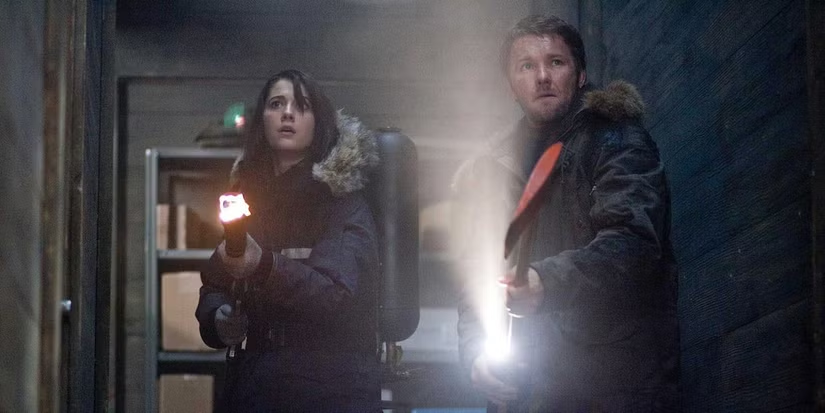
Now, 2011’s prequel? Well, it tried, but the heavy reliance on CGI fell flat for fans of the original. Sure, they aimed to bring a modern touch, but nothing beats the stomach-churning detail of those animatronics and puppetry. The 2011 version might have expanded the lore, but it missed that nasty, tactile oomph that made the original unforgettable.
The Real Horror: Isolation and Fear of the Unknown
Carpenter’s 1982 version hit theaters during the Cold War, and oh boy, it reflects that era’s mistrust and paranoia perfectly. Here’s a group of people stranded in the middle of nowhere, forced to confront an enemy that hides in plain sight. It’s not just the alien that’s scary—it’s the way it feeds off our worst instincts, fanning the flames of distrust until everyone’s ready to turn on each other.
The 2011 prequel also tackles this paranoia, showing the Norwegian team’s fear as they realize what they’re dealing with. Together, these films don’t just tell a horror story; they dive deep into how fear and isolation bring out humanity’s most raw, vulnerable, and, let’s be honest, not-so-pretty sides. In the end, The Thing isn’t just a monster—it’s a mirror, reflecting back our anxieties and the lengths we’ll go to survive.
The Thing’s Legacy: Why We’re Still Obsessed
Sure, The Thing didn’t exactly kill it at the box office back in ‘82, but over the years, it’s become a cult classic, a timeless nightmare we just can’t let go. Its open ending keeps fans speculating, and its gnarly practical effects have inspired filmmakers for decades. While the 2011 prequel tried to honor that legacy, it’s Carpenter’s vision that’s etched in horror history.
So, why are we still talking about it? Because The Thing goes deeper than jump scares and gross-out moments. It’s a story about trust, survival, and the fear of not knowing who—or what—is hiding right next to you. This isn’t just a horror flick; it’s a lesson in human nature, vulnerability, and the dark side of survival instincts.
Final Thoughts: A Masterpiece of Suspense and Symbolism
There you have it. The Thing is way more than an alien horror movie; it’s a layered, twisted tale of humanity facing its worst fears. Every re-watch brings new details, new theories, and more appreciation for Carpenter’s unmatched craft. So, what do you think? Do you have a favorite theory? Think Childs was human, or was he sippin’ on that drink with a side of alien DNA?
Drop your thoughts below—let’s talk paranoia, practical effects, and all the nightmare fuel that keeps The Thing alive in our minds long after the credits roll. And if you haven’t seen it yet…well, you’re in for a chilling ride.


Interesting.